
Tombe: Oil price volatility upends Alberta budget revenue forecast
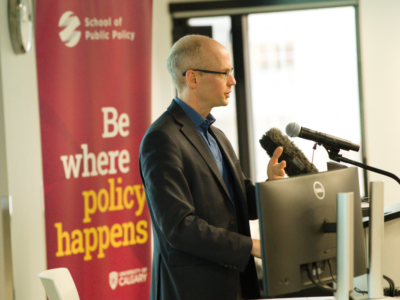
As higher oil prices upend the revenue forecasts in the Alberta government’s Budget 2026, economist Trevor Tombe told a Forum audience the province needs to brace for more oil price volatility with its finances.
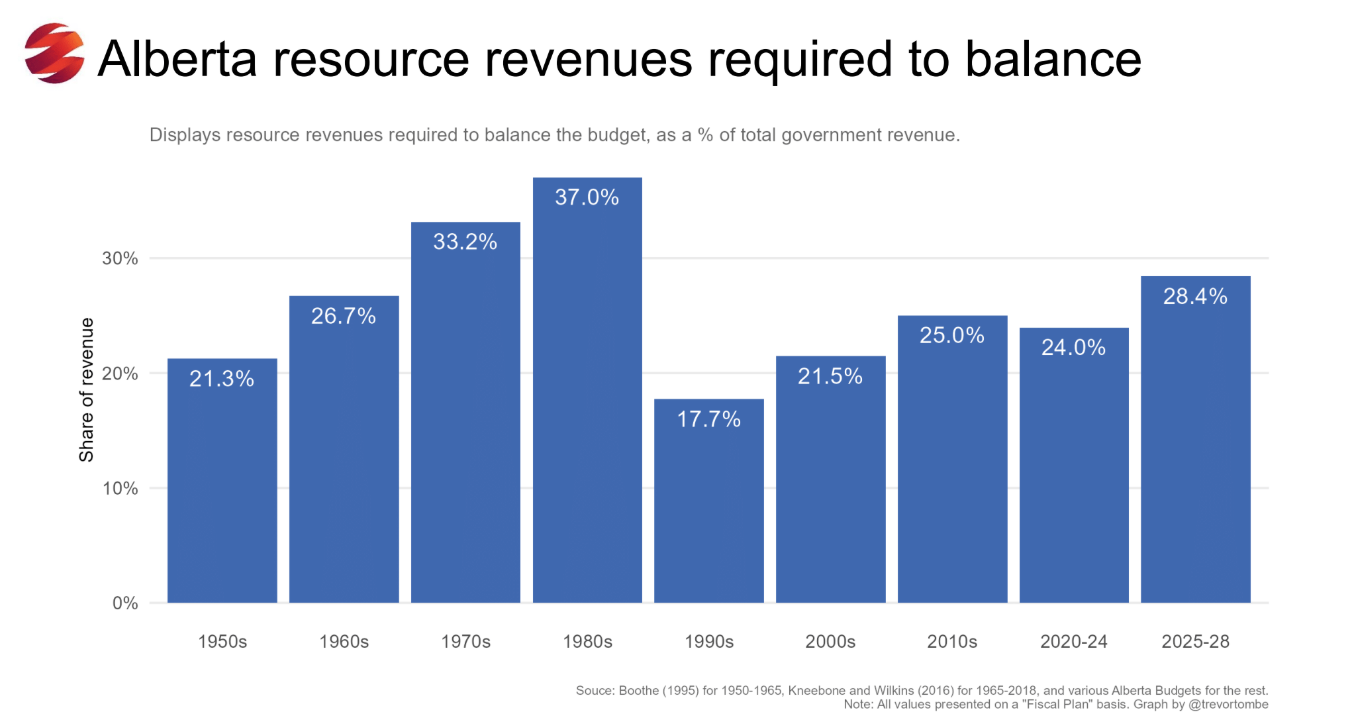
The surge in oil revenues could turn the forecast budget deficit into a surplus if prices remain high but Tombe noted the province has a greater reliance on rollercoaster resource revenues for a balanced budget than at any time since the 1980s. (Slide 31, See Below)
The Alberta government has managed the swings in oil and gas royalites and the impact on provincial finances for decades. However, Tombe noted the potential for unprecedented resource revenue volatility as war in the Middle East threatens to trigger the biggest supply disruption in history.
“We’re more reliant on it (resource revenues) than ever and it’s more volatile than ever,” said Tombe, Director of Economic and Fiscal Policy at the School of Public Policy. “We’ve talked about a royalty roller-coaster before, but we haven’t seen anything yet”
The 2026-27 Alberta budget released Feb. 26, projected a $9.4- billion deficit based on a benchmark oil price of US$60.50 per barrel. Prices surged to more than US$100 a barrel when the conflict began in early March and remained well above the forecast in the budget.
Any change in oil price has a far bigger impact on government revenues now than ever before.
In the 2016 budget, every $1.00 shift in the price of oil, over the course of a year, impacted provincial revenue $130 million. But in the 2026 budget, every dollar change in price has an $680 million impact. And it will only grow from here.
Despite concerns about the impact of U.S. tariffs on Canada and the state of the global economy creating increased uncertainty for policymakers, he emphasized Alberta’s economy is “in a good place overall.”
For more budget stability in the future, Tombe said the province could look to trim spending growth or adjust the structure of provincial revenues, noting the value of events like the Forum series to discuss policy options.
“Venues like this are where we can have these conversations about how we can achieve our long-term goals,” he said.